• About Sasha
  • Books Read By Year
    • 2010 Reads
    • 2011 Reads
    • 2012 Reads
  • Classics Project 2011

Sasha & The Silverfish

~ a reading journal

Tag Archives: Arthur Conan Doyle

Stuff I’ve Been Reading While I Disappeared from the Glittery World of the Intarwebz

25 Wednesday May 2011

Posted by Sasha in Marginalia

≈ 7 Comments

Tags

Anna Campbell, Arthur Conan Doyle, Biography, David Small, Erotica, Fiction – Novel, Fiction – Short Stories, Gloria Vanderbilt, John Green, Memoir, Oxford World’s Classics, Rebecca Skloot, Romance Novel, Sarah Shun-lien Bynum, Science, Steve Martin, The Classics Project 2011

It’s definitely an improvement: I’m guilty about abandoning this blog for fewer hours in a day. The usual excuses: Work’s been crazier than ever, I like sleeping, I like reading, I am lazy, blah and blah. Still, though, I owe it to my O.C. tendencies to kick-start this blog with a moratorium of the books I shouldn’t ignore. So. For posterity’s sake, and in the glorious spirit of lazy book-talk, here’s some of what I’ve been reading:


With The Immortal Life of Henrietta Lacks by Rebecca Skloot, I was, not strangely, a little late to the party—the blogosphere was all a-flutter who wants. But it took a while for me to develop this current inclination for science-y books, especially science-y books that concern people—real, complex people. And this one’s one of the best, even one of my favorite books.

I mean, a book that has you keening in outrage every couple of pages or so—that’s got to be a favorite, right? A book that makes you wish you could go back in time and change opinions, even social structures. Or, at least, slap some sense—or a modicum of decency—into the people in this book. Oh, some are pure evil, yes—but, sadly, most are just working within a given, with no reason for them to be incite change, or even think about whether something’s wrong with the status quo.

Again, impotent outrage. The most annoying thing, too, is knowing that however grr I am reading all this now, I might not have batted an eye years and years and years ago, if I were there. But that’s all, still, the self-righteous side of me.

* * *

From the introduction to The Memoirs of Sherlock Holmes, by Arthur Conan Doyle: The story of Holmes and Watson is one of developing closeness between two men. “This has led to some interpretations of the stories as portraying a homosexual relationship. But these overlook the fact that closeness and love, in a non-sexual form, can demonstrably exist between two men.” And so, just so we’re clear: Yes, I come here for the bromance.

In Memoirs, our Holmes is jarringly fallible—a sharp contrast to the previous stories I read. The mistakes we makes based on the erroneous assumptions he makes stem from his inability to understand human folly. [It’s not strange that a lot of the stories here revolve around lurve and its various, glorious messes.] At a story’s close, Holmes quite pensive:

‘What is the meaning of it, Watson?’ said Holmes, solemnly, as he laid down the paper. ‘What object is served by this circle of misery and violence and fear? It must lend to some end, or else our universe is ruled by chance, which is unthinkable. But what end? There is a great standing perennial problem to which human reason is far from an answer as ever.’

And by “human reason,” he means, himself. Haha. Aherm. This is a Holmes who isn’t always right. Is it safe to assume that Holmes, in his trouble understanding human motive (it’s ineffable emotions and impulses), is at his most human yet?<

This is also a Holmes who can be beaten. Here, in Memoirs, Holmes comes face to face with the fabled Dr. Moriarty—the Napoleon of crime . . . the organizer of half that is evil and of nearly all that is undirected in this great city. He is a genius, a philosopher, an abstract thinker. He has a brain of the first order. He sits motionless, like a spider in the center of its web, but that web has a thousand radiations, and he knows well every quiver of each of them. I am tempted to go all dorky with this story, with dissecting Moriarty, with trying to understand why I like this despite the fact that it is a poorly constructed story. Bah.

* * *

Anna Campbell is one of my favorite writers. As I write this, I’ve only read three of her novels, but I’m hella sure. [The first novel of hers I read was Captive of Sin.] This is what I wrote in my notebook [after I wept] after I read Untouched:

  • A romance that truly delivers and more, one that exceeds expectations. This is a HEA well-deserved. This is love passionate, angsty, overwrought. So freaking awesome.
  • Vulnerability and angst give plenty of room for the growth of the leads, both individually and with their relationship. We have two damaged but infuisisiedly [I cannot read my own handwriting, okay?] strong leads here—Matthew, consigned to madness by a greedy uncle, and Grace, a widow who once suffered through her impetuousness and has since pretty much lived the past decade in guilt and misery. Both very very strong characters.
  • Campbell! Your sex scenes! These should be in a primer on how to write sex scenes that further both plot and romance and character development. They were so necessary, so exquisitely done. For the reader, it was an easing of the good-lord-heavy tension the author set up. For the leads, well, even though the lovemaking only fueled their passion, you get the feeling that these people can breathe again, my goodness. Particularly, the tenuousness of their imprisonment (their circumstances!) but their roles within the act. Here, they fumble. There is room for awkwardness, for mistakes. I am crying.
  • The language is spot-on, the mood right—so dark and angst-ridden without being overbearing: just compelling. This is poignant. Quite difficult to read at times because of the pain [gahk], but you soldier on: you believe in the narrative power, in the inevitability of that happy ending—there’s got to be a happy ending!
  • This is good storytelling, no doubt. Oh my goodness, is it so typical of me to love the angst so much because it allows for so much poignancy, so much tenderness?

Excuse my breathlessness, haha. After that, I read her Tempt the Devil—the inebriation must account for the fact that I can’t find my notes on that one. Still, I liked it. I know I did. I also remember that it wasn’t as Sasha-shattering as Untouched was, but I so very much appreciated the risks Campbell took in adopting a courtesan-heroine and a cold, cold, yummy widower (and occasional jerk) as hero.

I have one last Campbell in my shelves—My Reckless Surrender—and I am saving that for a rainy day. [Dear bookstores, please indulge me, please, and restock her books, please?]

* * *

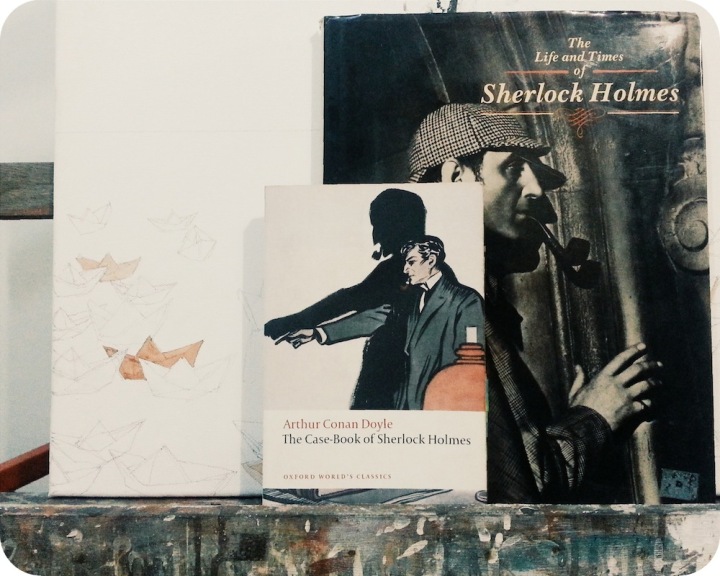
Yes, that is dirt on the spine of the primed-canvas-white An Object of Beauty [Steve Martin]. I removed the as-white dust jacket; sacrifices still had to be made. Ya know, this one’s actually one of the most pretty books I’ve ever held—its lay-out, its structure, the colored plates snuggled inside the text. Yeah, I’ve already heard the pun of this book being, literally, an object of beauty, blah blah. Aherm. From paltry notes:

  • Lacey Yeager, its heroine, is just so damned fascinating. Impressive and so hateable. But you can’t pin her down: You cheer for her, and yet her slyness disgusts you. This novel is, essentially, the ascent (and downfall) of Lacey. It’s a familiar trajectory, one that’s almost trope. Like Victorian-era, proto-feminist heroines. Or, like Emma Bovary. And, well, like Sidney Sheldon’s, too, while we’re here.
  • This art world talk is all so chillingly familiar. The boredom, the repetitions, the pretentiousness, the naïveté, the posturing, the occasional glimmer of truth and wonder. Even the people are familiar. I, um, enjoyed it?
  • I like this book a lot. Hell, the content naturally interests me, and the only time the author makes himself known is when the reader deliberately draws back to think, “Okay, wow, how’d you figure all this out?” Seriously, between the simple heartbreak of Shopgirl and this insider-y, darker-motivations kind of novel, Steve Martin really scares me.

* * *

This month seems to have me taking a second taste of previously-loved authors. This is just my second John Green (what is wrong with me?), and, no, An Abundance of Katherines is not as good as Looking for Alaska, but it’s one fun, affective book.

I mean, Colin Singleton has been dumped for the 19th time by a girl named Katherine. That’s always fun to read about. Sigh. Reading John Green has the uncanny ability to make me feel really, really young and just a little bit dorky. It also makes me go all giggly and squeal-y, and occasionally groan-y because of the mathematics. I love you, John Green, in a non-creep way.

I was reading this in the company of a friend, and I told her, “Ya know, reading John Green, you wish you were one of the people he wrote about. That you’re life’s all good, if a little better, when you find yourself a character in a John Green novel.”

* * *

For some comic relief: Obsession, by Gloria Vanderbilt. Architect extraordinaire dies, leaving his wife grief-stricken. And she comes across a stash of letters that reveal, ooh, a double life.

Oh my gawd, this was so bad. So very bad it was cringe-y comedic gold. So very pretentious and absurd—if this is how the upper echelons of society get their erotic juju on, hahahahahaha. Smarmy-breathless earnest dirty talk that sounds so affected—ZOMG it’s la Judith Krantz at her high-roller kitschiest. But at least Krantz makes me feel that she’s self-awarely campy, compared to this one. This one was just so bad, and not in an ironic way. Oh, lordy, it’s like reading mud with glitter thrown over it

* * *

Stitches, by David Small. I read this while waiting for my ride to work. I picked it idly, although I’ve heard so much praise about it already. Mostly from my housemates, who’d angle their heads toward the shelf, and demand that I read it, that I read it immediately.

I got around to it, obviously. Stitches is a memoir in, um, graphic/illustrationz form[?], which is an awesome way to tell a story. I read it in one, tension-filled hour of the simplest art, of outrage-inspiring revelations, of poignancy. Also, more outrage. I mean, the story Small tells is deceptively simple. That is, yes, it’s hellish, but it’s presented without fanfare. Augh, this was so goddamned devastating, okay? Good fucking morning to you, too, Sasha.<

he purity of the author’s remembering shocks me. Even makes me apprehensive for his welfare right about this minute. Stitches, though, reminds me, that you must tell the story that matters most to you in the best way you can—in the medium you can call your own, in the medium that will allow you to do so.

* * *

Ms. Hempel Chronicles, by Sarah Shun-lien Bynum. How I loved this book, and how I adore Ms. Hempel. She’s so affective and real and strange and lovely and normal and more than a little awkward. I love her so much, it’s creepy.

Also, I’m impressed with Bnum’s ease with the form: the individual stories, how they each reveal a truth about Ms. Hempel, her past, her future, the people around her—her students, her co-faculty, her family. But, also, Bynum’s awareness to establish a grand narrative of Ms. Hempel’s life, if in patches: the stories aren’t conventional neat episodes. Instead, they read like necessary revelations: like you’ve stepped into a precise moment of Ms. Hempel’s life, equal parts mundane and life-defining. This one is, as Jonathan Franzen himself writes, pure pleasure.


And that’s about it. I’ve still got a lot of backlog to go through. But at the moment, this will do nicely. I’ll see you again soon, Oh Puir Neglected Blog, once I surface from the paperwork and the stationery and the housework and—ew—life.

On The Adventures of Sherlock Holmes — “the last court of appeal” — by Arthur Conan Doyle

28 Monday Mar 2011

Posted by Sasha in Marginalia

≈ 3 Comments

Tags

Arthur Conan Doyle, Classics, Fiction - Short Stories, Oxford World's Classics, The Classics Project 2011

Aherm. Previously, in Sasha’s Escapades with Sherlock Holmes and John Watson, MD — Baker Street, the canon, and all that sleuthing jazz:

♦ A Study in Scarlet. My first Sherlock Holmes, the first book, which “beat my preconceptions to a pulp.” Just so giddy to be part of ~Holmesiana.

♦ Sherlock Holmes Selected Stories. Which was probably a bad decision, re the correct order of the Sherlock books to read. But I liked the range — a Sherlock Holmes crash course. I loved, especially, how Holmes and Watson grew more vivid to me, their roles — as independent characters, and as the author’s creations — more solid.

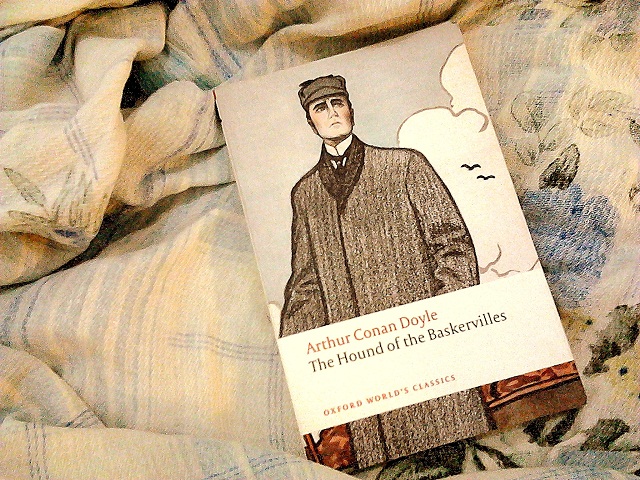
The latest in this not-quite-as-complicated relationship: The Adventures of Sherlock Holmes by Arthur Conan Doyle.


Every time I pick up ACD’s Sherlock stories, I keep wondering myself if the previous joys were all flukes, if I was going to grow tired of him, if he would become too obscure-ish for me, if this would be the time I’d say Meh, not for me. It’s doubly damning, see. My reading until recently had a giant blind spot regarding the Classics, and mysteries and detective-novels [contemporary or pioneers they may be] were almost never in my reading list [we don't count sub-plots, right?].

But Sherlock Holmes and Watson get me every time. Their peculiar selves, their relationship, the cases they damnably solve all-too-teeth-gnashingly. Even what one’d assume as a rigid structure — a briefing by a client, Holmes solving it all, Holmes and Watson confirming that Holmes was right, durh — surprisingly bends to accommodate the characters who flit and fleet into their lives.

Yes, every time, it feels like coming home. No one is as surprised as I am. This familiarity might breed a drought of Sensible Things to Say, but each encounter with Holmes/Watson allows me a new perspective, else a new facet to scrutinize. I’ve covered the preconceptions, I’ve touched on the ideal-ness of the Holmes-Watson bromance and contrast.

In these stories, I read a Sherlock Holmes that was — egads — more human. More normal, yes, but nicer. Eccentric, sure, more than a little cold — which is probably why every decent gesture resonates.

[Which is, I realize now, rather strange -- Adventures is, after all, the first collection out of Doyle's Strand-published stories. If I hadn't made that detour to the Selected Stories, would this fresh humanity have struck me the same way? Struck me at all?]

Oh, he’s a strange little duck, arrogant, nasty, so goddamned limitedly perfect. But these new adventures — getting foiled by Irene Adler, Holmes damning the cruelty of a stepfather’s prank, omg Holmes with a pistol trying to save a damsel in distress – dude. I am in love with Doyle’s stories, his creations.

I read, and I have so much fun. So, so much. I feel baffled, but ecstatic anyway. [Holy cheesecake, why do I feel like weeping?]

“It was indeed like old times when, at that hour, I found myself seated beside him in a hansom, my revolver in my pocket, and the thrill of adventure in my heart.”

06 Monday Dec 2010

Posted by Sasha in Marginalia

≈ 11 Comments

Tags

Arthur Conan Doyle, Classics, Excerpts, Fiction - Short Stories, The Classics Project 2011

In glancing over my notes of the seventy-odd cases in which I have during the last eight years studied the methods of my friend Sherlock Holmes, I find many tragic, some comic, a large number merely strange, but none commonplace; for, working as he did rather for the love of his art than for the acquirement of wealth, he refused to associate himself with any investigation which did not lead towards the unusual, and even the fantastic.

I feel like I’m part of some grand tradition whenever I read Sherlock Holmes in his “original” form. As I mentioned in my first encounter with Sherlock Holmes and Watson, A Study in Scarlet, I’ve always been more exposed to other people’s interpretations of the great detective and his adventures, and I feel, well, kind of awesome, for encountering him directly [directly-er?] like this, as Arthur Conan Doyle wrote him.

I have the Sherlock Holmes canon on my shelves, and I tried to arrange them chronologically. Sherlock Holmes Selected Stories, I did not know where and how to fit it — and so I read it first. Which might have been a mistake, but by the third story, I realized I ought to treat it as a primer, an overview, of the Holmes Chronicles. These stories span years, and so I could see the development of the individual characters, their lives, and especially their relationship. Though, yes, it was an emotional rollercoaster, this Sherlock Holmes crash course.

That’s what I’ll focus on here. Although my instinct is to write about the stories individually, the more natural way to go, it seems, is to treat these stories collectively. I think it’s because it’s primarily about one person — and one particular relationship. The book — the canon, of course — is so particular to this character.

Besides, the commonality of the reading experience with each story follows this usual progression of my reactions: guardedness → excited guessing → exasperated guessing → frustration → anger and self-doubt → awe at Holmes’ genius and Doyle’s plotting → bewilderment → awe all over again. Sigh.

Being a stranger to this genre, I have no idea how these things are plotted; I can’t fathom how an author can make the stories fresh every damn time. It’s easy to underestimate Holmes and his cases, and, for a while, it’s quite fun to try to solve them myself.

But, good lord, Holmes’ uncanny ability to get it right in the most forehead-slapping manner! I commiserate with Watson: I could not help laughing at the ease with which he explained his process of deduction. ‘When I hear you give your reasons,’ I remarked, ‘the thing always appears to me to be so ridiculously simple that I could easily do it myself, though at each successive instance of your reasoning I am baffled, until you explain your process. And yet, I believe that my eyes are as good as yours. To which Holmes’ response: ‘Quite so,’ he answered, lighting a cigarette, and throwin himself down into an arm-chair. ‘You see, but you do not observe. The distinction is clear.’ Sure, whatever.

Ah, Watson. The perfect craft decision. He’s identifiable because he’s normal. He’s not creepy-right like Sherlock, but he’s intelligent. As a chronicler, he’s invested in his subject.

There was something in his masterly grasp of the situation, and his keen, incisive reasoning, which made it a pleasure to me to study his system of work, and to follow the quick, subtle methods by which he disentangled the most inextricable mysteries.

And fascinated by him too, though that subject curls his lip at such fascination:

‘Honestly, I cannot congratulate you upon it. Detection is, or ought to be, an exact science, and should be treated in the same cold and emotional manner. Your have attempted to tinge it with romanticism.’

Hah. But, more importantly, Watson does not let this fascination cloud his judgment. That is, though Holmes accuses his friend of romanticizing the process — truly, romanticizing him — Watson gives us the sharpest picture of Holmes: a cold man, possibly lonely, keenly intelligent, an addict, and “as an isolated phenomenon, a brain without a heart, as deficient in human sympathy as he was pre-eminent in intelligence.”

Ah, but Watson — Holmes wuvs you: after a protracted absence, our cold walking brain goes:

‘So it was, my dear Watson, that at two o’clock today I found myself in my old arm-chair in my old room, and only wishing that I could have seen my old friend Watson in the other chair which he has so often adorned.’

I stand by what I said while reading the first book: Bromance, definitely Bromance. Looking forward to the rest of the canon snuggled in one of the boxes in this apartment.


Pancho and I dorking around with ze book. Yes, it is verra creepy.


marginalia || A Study in Scarlet, by Arthur Conan Doyle

10 Tuesday Aug 2010

Posted by Sasha in Marginalia

≈ 12 Comments

Tags

Arthur Conan Doyle, Classics, Excerpts, Fiction - Novel, Oxford World's Classics, The Classics Project 2011

My first Sherlock Holmes! I won a giveaway on Twitter a while back, for the complete Sherlock Holmes canon from Oxford World’s Classics. They’ve been on my nightstand [well, what surface I could find] since I got them from the post office. So, I figured this would’ve been as good a time as any to get into a cultural icon. I began from the very beginning, the first novel — A Study in Scarlet, by Sherlock Holmes. And it blew all my expectations — my preconceptions, really — out of the water.

. . . [A] study in scarlet, eh? . . . There’s the scarlet thread of murder running through the colourless skein of life, and our duty is to unravel it, and isolate it, and expose every inch of it.

Here are how I’ve known Sherlock Holmes: as the cartoon version from who-knows-where, with the cape and pipe and that giant nose, and all-around silliness; as, uh, yummified by Robert Downey, Jr. in the fairly recent movie. And the vaguest impressions I had of the books themselves, even before I read them: stuffy detective stories with imposing characters I couldn’t be bothered to identify with. Tsk.

Yes, A Study in Scarlet beat my preconceptions to a pulp. I enjoyed myself so much, and I admit to being a little surprised by that. I found a complex book, one with a conscious balance of plot and character. The mystery of the case intrigued me — Sasha who doesn’t exactly hoard detective novels — but it was the revelations about Holmes, Watson, and other central characters that kept me reading. That, and the language. It was just so, I dunno, so right. For the atmosphere. For the characters. For the time. And — gasp — I liked reading the prose.

About that: I suppose one reason I’ve shied away from the Sherlock Holmes canon is due to my general timidness when it comes to Classic books. But I’ve been working on that. My “success” with Doyle’s novel makes me look forward to more Classics in my reading list. Not to mention more Sherlock Holmes stories.

Anyhoo. If anyone’s interested [or just nosy, heee], here are the notes I took while/after I read [as usual, excuse certain incoherencies -- I was mostly talking to myself]:

♦ A note on the OWC edition, and its many asterisks, not to mention forewords and prefaces and appendices. Whoa. At first it was confusing, and it got in the way of my appreciating the story. There’s nothing like an academic approach that scares you off a book you’ve already half-decided as daunting. But the dork in me couldn’t help it. When I wanted to, I let the book inform me. When I didn’t, I read on. Also, read most of the discussions on the text after I’d finished with the novel. I feel giddy and proud of myself for nodding several tmies.

♦ Sherlock Holmes and John Watson, M.D. start off as roommates! Hyuk. I am trying not to wait for the bromance.

♦ Watson as foil. Not only as a character, a contrast to Holmes’ personality. It’s more basic than that: With their relationship, he stands as Sherlock’s sounding board, thereby allowing the reader to get inside Holmes’ head, what with the latter’s split-second skills at deduction. It’s a simple technique, but one one that’s incredibly helpful, not to mention vital in involving the reader. By doing his “See here, Watson, my man,” shtick, he’s involving us too.

♦ That. Watson’s perspective — a conscious decision of Doyle’s? Because, frankly, Holmes wouldn’t normally make an involving character on his own. He needs a chronicle. And we need him to have a chronicle.

♦ Oh my goodness, Holmes, really? That doggie?!

♦ PART 2 – There’s this long and transatlantic flashback, separate from Watson’s voice. And I had to grumble, “What is this even for?” But, but: It’s the murderer’s story, divorced of anyone’s preconceptions. That is, with the omniscient point of view, we’re assured that this actually happened, and we need not be convinced of that fact. The murderer tells his story once he’s caught, but we needed this separate narrative.

♦ Awesome. I mean, it’s de rigeur these days to humanize who we’d be quick to judge as villains — and I say this as I go through Season 5 of Bones. I was rooting for this guy by the time the back story was through, and his own storytelling cemented that. Not so much because he draws my sympathies, not even so much because he’s right. It’s just what the narrative drew from me — the character’s, and Doyle’s.

♦ Thirst for vengeance may be, essentially, skewed. But it’s not without justifications, and I’m glad that it’s not the character or the author wheedling for us to consider them. That’s the story, we’re told. Deal with it, ya know? I did. And it is, of course, kind of sad.

♦ And yes, I noticed how there was no comment from Holmes about this story. He’s silent. Watson offers some passing remarks on the tale, but it was ultimately left to the reader to decide. I decide, Aye.

* * *

If you’re still reading, you may have noticed that I may have offered mini-spoilers, but wouldn’t comment on the actual crime (aside from the fact that there’s been a murder), and how they went about solving them. It’s really a matter of this blogger’s ability, or lack thereof. For the record: I did not see that one coming. I was just tagging along Holmes and Watson, really, haha, slightly agape.

To the rest of the canon sitting pretty on my shelf: Here I come.


♣ The Twittering Blog

  • For book synopses, I'm allowed to hang it and just throw you to the wolves over at Wikipedia, aren't I? #lazy ~ 2 weeks ago
  • RT @FSG_Books: (Saving our McLovin jokes for an official announcement) RT @PublishersWkly 'Superbad' Director May Adapt Marriage Plot ht ... ~ 2 weeks ago
Follow @sashasilverfysh

♣ JUNE’S A-COMING!

♣ Categories

  • Book Dump
  • Currently Reading
  • Digressions
  • Elsewhere
  • Marginalia
  • Monthly Wrap-Up
  • Postscript
  • Sunday Salon

♣ Preoccupations

Abandoned / Skimmed Alain de Botton Art & Illustrations Arthur Conan Doyle Books About Books Charlotte Brontë Classics Classics Circuit Depression Elizabeth Hardwick Erotica Essays Excerpts Fiction - Novel Fiction - Novella Fiction - Short Stories Harold Brodkey HarperPerennial History Irène Némirovsky Lorrie Moore Lydia Davis Memoir Metakritiko NYRB Classics Oxford World's Classics Paul Auster Peirene Press Philippine Literature Philosophy Poetry Raymond Carver ReadHard Book Reference Rereading Richard Yates Roland Barthes Romance Novel Science Short Story Month 2010 Short Story Month 2011 Siri Hustvedt The Classics Project 2011 The NYRB Classics Project Translation

♣

Enter your email address to subscribe to this blog and receive notifications of new posts by email.

Join 779 other followers

♣ Subscribe to RSS

RSS Feed RSS - Posts

RSS Feed RSS - Comments

Blog at WordPress.com. Theme: Chateau by Ignacio Ricci.